Road Trip Routes Slovenia Adventure
Slovenia is small, diverse and excellently connected: from alpine panoramas to turquoise rivers and the Adriatic, many highlights are just one to two driving hours apart. This guide presents three varied road trips (5 to 10 days) – with concrete timing and planning tips as well as a compact toll guide. Secure the digital vignette for Slovenia in advance so you can use motorways and expressways with ease.
.webp)
Before You Set Off: Planning is Key
The right itinerary depends primarily on how much time you have available. Slovenia offers plenty of highlights to make your holiday a special experience – whether you prefer cultural city trips or are planning a road trip into nature.
5 to 6 days: You have enough time for the most important highlights, though there is less room for relaxation. Depending on your starting point,
it may make sense to skip the coast and focus on Ljubljana and Bled instead.
7 to 10 days: An ideal timeframe to explore Slovenia from the capital to the Adriatic. You won't be able to cover every hiking region, but the most beautiful highlights can be combined very well.
Our Tips
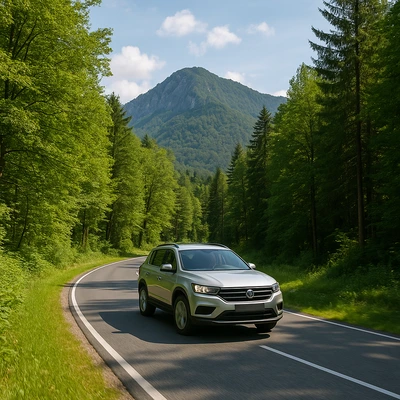
We show you suitable road trips for short and longer journeys. As a practical rule of thumb: plan for 1 to 3 hours of driving time per day and a maximum of two major activities. This leaves enough room for breaks, enjoyment and spontaneous stops, rather than "ticking off" one destination after another. Also capture your experiences with photos. When planning, take the season into account too:
May to October: Pleasant temperatures and good conditions for exploring valleys and natural regions thoroughly.
July to August: A particularly popular travel period with a genuine summer feel. It is advisable to book accommodation early.
If you are travelling during school holidays or on bridge days, you should also expect increased traffic volumes.
Slovenia by Car: Getting There and Useful Starting Points
The optimal starting point depends on where you are travelling from. However, these departure points are often a good choice:
Ljubljana: A central starting point with many onward travel options.
Bled/Bohinj: An alpine start with an immediate nature experience, including lakes and waterfalls.
Piran/Slovenian Istria: An attractive coastal beginning, ideal in combination with a subsequent nature programme.
If you are travelling via Austria, you may use the Karavanke Tunnel. This tunnel incurs a special toll. The fee is payable independently of an Austrian vignette or a distance-based toll, meaning you must pay the special toll in addition. If you would like a compact overview for your travel preparations, feel free to read our travel checklist for Slovenia.
Road Trip 1: Alps, Lakes and the Adriatic (7–10 Days)
This route is especially suitable if it is your first trip to Slovenia and you want to experience the most well-known stops. It combines city sightseeing with nature experiences. The hikes are mostly easy to moderate and offer – depending on the season – opportunities for swimming too. Take the chance to try traditional dishes along the way. Overview of stops:
Ljubljana: Old town, castle and riverside promenades (1–2 nights)
Bled: Lake Bled, island and Vintgar Gorge (1 night)
Bohinj: Lake, waterfalls and easy hiking trails (1 night)
Triglav National Park / Julian Alps: Panoramic roads, viewpoints and alpine nature (1 night)
Soča Valley: Suspension bridges and emerald-green water (1 night)
Karst: Škocjan or Postojna Caves (1 night)
Piran & Slovenian Istria: Old town, salt fields and the sea (1–2 nights)
Ljubljana (1–2 Nights)
Start your trip at a relaxed pace in Ljubljana. The compact old town with its market, castle hill and riverside promenades is ideal for settling in. In the morning, a walk along the Ljubljanica is a great option; in the afternoon, a visit to the castle with views over the city is worthwhile. In the evening, you can explore the riverside restaurants and bars. (Read more: Ljubljana)
Bled (1 Night)
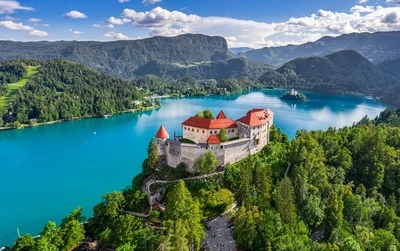
The next morning, head to Bled, one of the country's most photographed spots. Those who arrive at the lake early will enjoy particularly beautiful light. A change of perspective is possible by rowing to the island church. Alternatively, you can walk around the lake and enjoy a cream cake. If time allows, a detour to Vintgar Gorge is well worth it. (Read more: Bled)
Bohinj (1 Night)
Bohinj feels quieter and more natural compared to Bled. The clear water and relaxed atmosphere are ideal for stand-up paddling, canoeing or a lakeside walk. In good weather, waterfalls and easy alpine meadow paths around Stara Fužina are worth exploring. Those who prefer a more leisurely pace will find good spots for a break along the flat shoreline.
Triglav National Park / Julian Alps (1 Night or Day Trip)
The Julian Alps offer sweeping panoramas, often without long walking times. Short side roads lead to viewpoints from which well-marked trails open up further perspectives. This makes it possible to experience impressive landscapes in a short time. (Read more: Triglav National Park)
Soča Valley (1 Night)
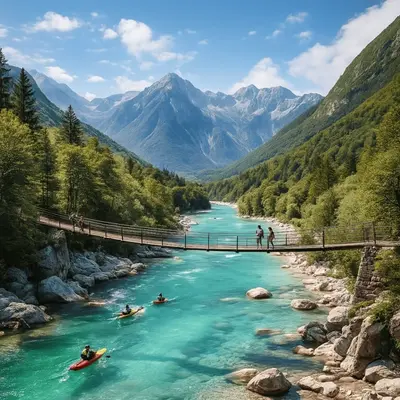
The Soča Valley offers a change of colour: the water glows emerald green and appears extraordinarily clear. Plan the drive in stages, with photo stops at suspension bridges or natural swimming pools. Those who want to be more active can book guided tours, for example rafting, light canyoning or short trails along particularly impressive stretches. (Read more: Soča Valley)
Karst (1 Night)
In the Karst region, Škocjan or Postojna impress with spectacular cave worlds. The Lipica stud farm adds a cultural highlight. Between cave visits, Lipizzaner horses and regional wines, you can consciously slow down the travel pace a little.
Piran & Slovenian Istria (1–2 Nights)
At the end, the Adriatic awaits: in Piran, Venetian facades meet Tartini Square and a lively promenade. From the city walls, the view extends over the rooftops to the sea. The next day, salt fields and small bathing coves are perfect for a relaxed finale. (Read more: Piran)
Slovenia by Car
In eight to ten days, this route has a particularly pleasant rhythm. Driving times remain manageable: Ljubljana–Bled approximately 45 to 60 minutes, Bled–Bohinj around 30 to 40 minutes. Depending on the mountain route chosen, roughly one to two hours is realistic towards the Julian Alps, as well as for the onward transfer to the Soča Valley. From the Soča Valley to the Karst, you should plan for around 1.5 to 2.5 hours, before reaching the coast at Piran in approximately 45 to 60 minutes. This leaves ample time for breaks, photo stops and spontaneous detours.
Road Trip 2: Alpine Panoramas and Impressive Valleys (8–10 Days)
This route is particularly suited to nature enthusiasts. You explore alpine landscapes, valleys and varied scenic routes. Even without a coastal stop, this road trip is an intense nature experience. Overview of stops:
Ljubljana: Starting point (1 night)
Velika Planina (Kamnik–Savinja Alps): Alpine plateau with shepherd villages (1 night)
Kamniška Bistrica: Gorges and viewpoints (day trip)
Logarska Valley: Panoramic road and waterfalls (2 nights)
Karavanke: Mountain roads and
nature regions (1–2 nights)
Ljubljana (1 Night)
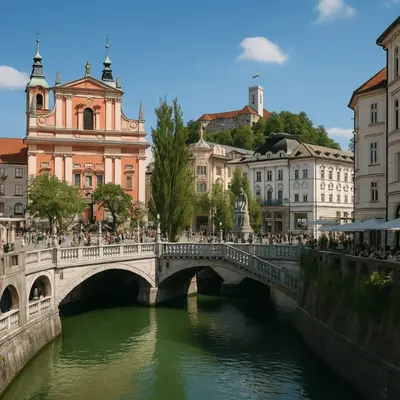
Begin with a quiet start in Ljubljana. A stroll through the old town, a view from the castle and a brief visit to the market are ideal for stocking up on provisions for the days ahead. For a relaxed drive towards Kamnik, it is advisable to set off the next morning before rush hour if possible. (Read more: Ljubljana)
Velika Planina (1 Night)
Velika Planina welcomes you with wide meadows, traditional shepherd settlements and impressive far-reaching views. Easy circular walks, a picnic and a short detour to viewpoints are particularly well suited here. (Read more: Hiking areas)
Kamniška Bistrica (½–1 Day)
Kamniška Bistrica offers crystal-clear tributaries, mossy banks and short gorges that can be reached without long climbs. Plan for at least half a day; in good light, a longer stay is worthwhile. (Read more: Hiking areas)
Logarska Valley (2 Nights)
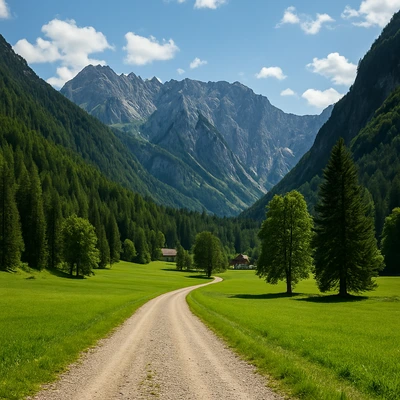
The Logarska Valley is considered one of the most impressive alpine valleys in Slovenia. On the first day, a leisurely valley walk with a stop for refreshments is a great option. Allow time for a waterfall; many paths are well marked and can be adapted to your fitness level. The second day is ideal for panoramic roads or short, scenic hikes. (Read more: Logarska Valley)
Karavanke (1–2 Nights)
The route concludes in the Karavanke. The appeal lies in alternating between beautiful mountain roads and short stops at viewpoints. With two nights, you can dedicate one day to the ridge roads and one day to quieter side valleys. (Read more: Hiking areas)
Slovenia by Car
The stages are chosen so that there is enough time to enjoy each stop. Between stages, the drive is usually 45 minutes to 2.5 hours. Motorways are mainly relevant for arriving and departing; on these, the digital vignette requirement applies (up to 3.5 t MAM). Plan one to two main stops per day to remain flexible for spontaneous detours.
Road Trip 3: Gourmet Route (6–9 Days)
This route is ideal for those who enjoy trying traditional dishes and have an interest in wine. You combine wine culture, nature experiences and cave adventures, before finishing your trip relaxing on the coast in Piran. Overview of stops:
Vipava Valley: Wineries and scenic ridges (1–2 nights)
Goriška Brda: Hilly landscape and villages (1–2 nights)
Karst: Cave world (Škocjan or Postojna) (1 night)
Pohorje Mountains: Waterfalls and
easy hikes (1–2 nights)
Goričko Nature Park: Castles, traditional orchards, peaceful hills (1 night)
Slovenian Istria: Coastal finale in Piran (1–2 nights)
Vipava Valley (1–2 Nights)
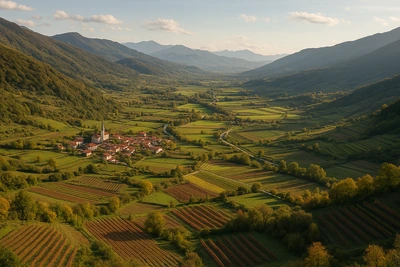
Among vineyards and small villages, you will find ideal spots for enjoyment and views. Plan short panoramic roads, a 20- to 40-minute ascent to a viewpoint and one or two wineries. Late afternoon is good for soft light; on windy days, sheltered spots are more pleasant. (Read more: Hiking areas)
Goriška Brda (1–2 Nights)
Cypresses, hilltop villages and narrow vine lanes define this region, which is often referred to as "the Tuscany of Slovenia". Short walks to viewpoints, photo stops on hilltops and an evening visit to a wine cellar are ideal. In the mornings, the roads are often particularly quiet. (Read more: Hiking areas)
Karst (1 Night)
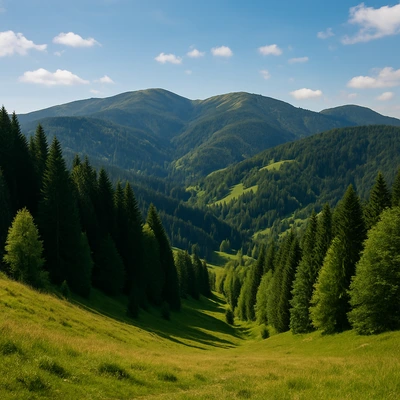
In the morning, discover the world underground – either Škocjan with its dramatic gorge or Postojna with its extensive cave system. In the afternoon, Lipica offers a cultural contrast. In the evening, a Karst tasting with ham, cheese and Teran wine is well worth it.
Pohorje Mountains (1–2 Nights)
Waterfalls, highland bogs and gentle heights make this region ideal for leisurely hiking. Combine waterfalls with family-friendly paths and wooden boardwalks through the bog. Those who prefer a more active experience can add a ridge walk with panoramic views. (Read more: Hiking areas)
Goričko Nature Park (1 Night)
Peaceful hilly landscapes, traditional orchards and castles are ideal for slowing down. Easy cycling routes and picnics with a view fit particularly well here. If you want to bring bicycles, you will benefit from the gentle paths.
Slovenian Istria / Piran (1–2 Nights)
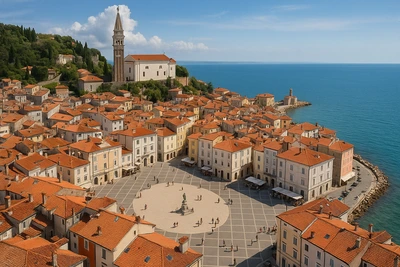
Promenades, salt fields and the alleyways of Piran bring the gourmet route to a maritime close. Stroll to the city walls for a panoramic photo, swim in small rocky coves and let the day wind down at the harbour. (Read more: Piran)
Slovenia by Car
Between stops, driving times are usually 45 minutes to 3 hours. In Slovenia, vehicles up to 3.5 t MAM are subject to the vignette requirement (digital vignette linked to the licence plate). Vehicles over 3.5 t MAM must pay a distance-based toll using an OBU ("DarsGo"). The Karavanke Tunnel is a special toll and must be paid in addition. Plan fuel and snack stops at larger towns.
Toll Guide Slovenia (Compact and Clear)
If you are unsure whether you need a vignette or have to set up the distance-based toll, you will find the most important information on our overview page on the toll in Slovenia as well as on vehicle classes. In addition, you can use our checklist to ensure your travel preparations are well organised.
Vignettes are Country-Specific
Please note that the digital vignette for Slovenia is valid exclusively in Slovenia. Toll requirements may also apply in neighbouring countries. Therefore, plan for additional vignettes where necessary, as vignettes are country-specific.
Why Our Digital Vignette is a Sensible Choice
DMC Digitale Maut Consulting GmbH simplifies your journey to Slovenia: the digital vignette can be ordered online in just a few minutes, is linked to your licence plate and is available with an individual start date if desired. Since 2019, we have been offering digital vignettes for Austria, the Czech Republic, Slovenia, Romania, Hungary, Switzerland and Slovakia – ideal for transit journeys. Our email support in 15 languages provides fast and clear assistance, including for questions about vehicle classes (1, 2a, 3a). You will also receive clear guidance on special toll routes such as the Karavanke Tunnel. This allows you to reliably comply with toll regulations and arrive in Slovenia stress-free.
Practical Tips for the Road
The following tips can help you plan your trip even better:
Time management: Where possible, travel very early or late on Fridays and Sundays.
Traffic rules: Observe speed limits and drink-drive limits. Further information can be found in our guide on traffic rules.
Nature: Use only marked paths, leave no litter and heed notices in nature reserves.
Camping: Wild camping is generally not permitted in Slovenia. Use only designated campsites.
Weather: In the mountains, weather can change quickly. Light layers, a rain jacket and sturdy footwear are recommended.
The Europamaut Team Wishes You a Wonderful Trip!
With these three road trips, you will experience Slovenia in all its variety: diverse, rich in experiences and easy to plan. Secure the digital vignette in advance and enjoy short driving times, sweeping panoramas and the unique interplay of Alps, river landscapes and the Adriatic. We wish you a safe journey and an unforgettable travel adventure.
FAQ Slovenia: Questions About Travel and Tolls
Answers to the most frequently asked questions on this topic.
Do I need a vignette when travelling in Slovenia?
Yes. As soon as you use a motorway or expressway and your vehicle weighs up to 3.5 tonnes MAM, a digital vignette is required. It can be purchased online, is valid immediately or from a chosen date and is linked to your licence plate.
Which special toll routes are relevant for holidaymakers?
The most important special toll route is the Karavanke Tunnel on the route from Austria to Slovenia. The tunnel must be paid for in addition to the vignette. For cars, a ticket is sufficient; for vehicles over 3.5 t MAM, payment is generally handled via the DarsGo system.
What is the difference between a vignette, distance-based toll and special toll?
The vignette applies to vehicles up to 3.5 t MAM. The distance-based toll (DarsGo) applies to vehicles over 3.5 t MAM and is charged based on the actual distance driven. The special toll applies on individual routes such as the Karavanke Tunnel – regardless of whether you use a vignette or DarsGo.
Why a digital vignette and not a sticker vignette?
The digital vignette is linked to your licence plate. This means: no sticking, no scraping off and no risk of a vignette being applied incorrectly. It can be purchased online, activated immediately or set to a desired start date.
Can I buy the digital vignette at short notice?
Yes. It is important that you have the vignette before driving on toll roads. Purchasing it retrospectively is not possible.
Is the digital vignette for Slovenia also valid in other countries?
No. Vignettes are country-specific. For transit through other countries, you may need additional vignettes.
How do I identify my vehicle class?
Classification is based on the maximum authorised mass (MAM) and the height above the front axle: Class 1 (motorcycle), 2a (motor vehicle up to 3.5 t, under 1.3 m), 3a (motor vehicle up to 3.5 t, over 1.3 m). Motorhomes up to 3.5 t with fixed fittings generally fall into class 2a.
Is the vignette sufficient for the Karavanke Tunnel?
No. The Karavanke Tunnel is a special toll and must be paid separately (regardless of whether you have a vignette or an on-board unit).
